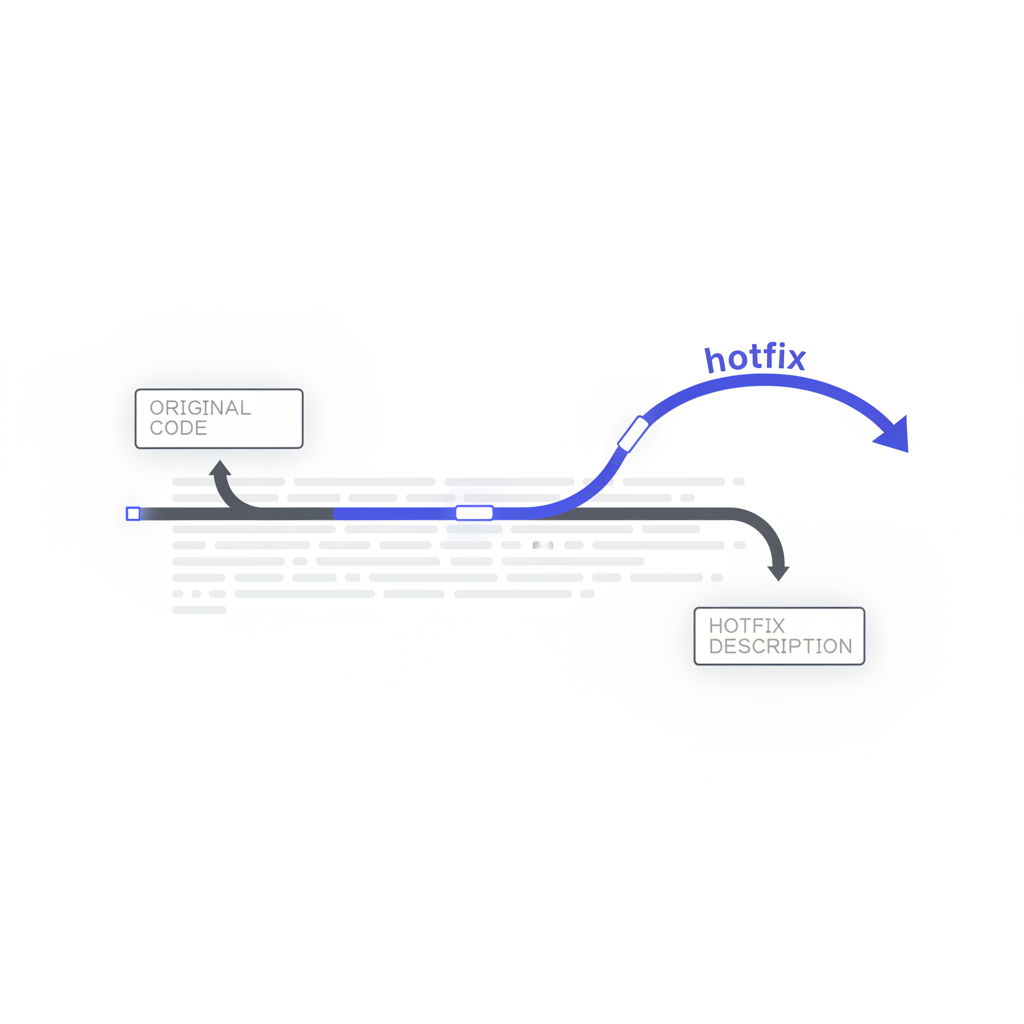
PR Description for Hotfix Branch: Clarity Under Pressure
You've just been paged. Production is down, or a critical feature is failing. The clock is ticking. You're diving into the codebase, trying to identify the problem, and then implementing a fix as quickly as humanly possible. This is the reality of a hotfix. In the rush, the last thing on your mind might be writing a comprehensive Pull Request (PR) description. "It's just a one-liner," you might think, "everyone knows what's going on."
But this is precisely where a detailed PR description becomes not just helpful, but absolutely critical. Hotfixes, by their nature, are high-stakes operations. They introduce changes under pressure, often bypassing some standard review processes, and carry a significant risk of introducing new regressions or masking deeper issues. A well-crafted hotfix PR description provides clarity, reduces risk, and ensures everyone involved—from your immediate reviewers to future engineers debugging a related problem—understands the "why" and "how" of the fix.
The Unique Demands of a Hotfix PR
A hotfix PR isn't just another bug fix. It's an emergency patch designed to mitigate immediate damage. This means:
- Urgency: Time is of the essence. The goal is to restore service or functionality ASAP.
- Targeted Scope: Hotfixes should be as small and focused as possible, addressing only the immediate problem. Avoid "while I'm in here" refactors.
- High Stakes: Failure to fix, or worse, introducing new bugs, can have significant business impact.
- Reduced Scrutiny (Potentially): In some organizations, hotfixes might undergo an expedited review process, placing more responsibility on the author to communicate effectively.
Given these demands, the temptation to rush through the PR description is strong. You might feel like documenting it properly is a waste of precious time. However, skipping this step can lead to misunderstandings, inadequate testing, missed edge cases, and a lack of institutional knowledge about why a specific patch was applied.
Essential Components of a Hotfix PR Description
Even under pressure, certain pieces of information are non-negotiable for a hotfix PR. Think of this as your checklist to ensure you cover all bases:
- Problem Statement / Incident Reference:
- What exactly broke? How did it manifest (e.g., "Users seeing 500 errors on checkout," "Data synchronization failing for
Service X")? - What is the business impact? (e.g., "Preventing 10% of new sign-ups," "Causing data discrepancies for critical reports").
- Link to any incident tickets, monitoring alerts, or customer reports. This provides immediate context.
- What exactly broke? How did it manifest (e.g., "Users seeing 500 errors on checkout," "Data synchronization failing for
- Root Cause (Hypothesized or Confirmed):
- Why did this happen? (e.g., "Recent deployment introduced null pointer exception," "Database index was missing after migration," "Third-party API changed its contract").
- Even if it's a preliminary hypothesis, state it. This helps confirm the fix addresses the actual problem.
- Solution Implemented:
- Precisely what changes did you make? Be concise but clear.
- How does this specific change address the root cause and solve the problem?
- Explicitly state the scope: "This PR only adds a null check to
OrderProcessor.javaand does not refactor the entire class."
- Testing Strategy:
- How did you verify the fix?
- What specific steps did you take? (e.g., "Locally reproduced the bug and confirmed fix," "Ran integration tests against
Endpoint Y," "Tested on staging environment withTest User Z"). - Crucially, include steps for reviewers to verify the fix themselves.
- Potential Risks / Side Effects:
- What are the possible downsides of this change? (e.g., "Adding this index might briefly lock the table," "This null check could mask other data issues downstream").
- What wasn't tested due to time constraints? Be honest about known unknowns.
- Rollback Plan:
- If this fix introduces new problems, how do we revert?
- Is it simply a matter of reverting the commit, or are there database changes that need to be undone? (e.g., "Revert this PR," "Roll back database schema to
v1.2.3and then revert this PR").
- Monitoring / Verification in Production:
- How will you confirm the fix is successful once deployed?
- What metrics, logs, or dashboards should be watched? (e.g., "Monitor 5xx errors for
/api/v1/checkout," "Checkservice_x_data_sync_statusmetric for recovery").
- Follow-up Tasks (If Any):
- Hotfixes often patch symptoms. Are there deeper architectural issues or tech debt that need addressing later? Create a ticket and link it here. (e.g., "Created
JIRA-1234to refactorOrderProcessorto be more resilient to null data").
- Hotfixes often patch symptoms. Are there deeper architectural issues or tech debt that need addressing later? Create a ticket and link it here. (e.g., "Created
Concrete Examples
Let's look at how these components might play out in real-world hotfix scenarios.
Example 1: Database Performance Hotfix
Imagine your e-commerce platform is experiencing intermittent timeouts on its product listing page. After quick investigation, you pinpoint a slow query on the products table.
```
Hotfix: Add Index to products.category_id for improved listing performance
Problem Statement / Incident Reference
- Problem: Intermittent 504 Gateway Timeouts on
/productspage, especially during peak traffic. - Impact: Users are unable to browse products, directly impacting sales.
- Incident: PagerDuty Incident
INC-9876, Slack thread#prod-alerts-critical.
Root Cause
- The
productstable, with over 10 million rows, is frequently queried bycategory_id(e.g.,SELECT * FROM products WHERE category_id = ? AND is_active = TRUE LIMIT 20). - An
EXPLAIN ANALYZEon the problematic query revealed a full table scan, indicating a missing index oncategory_id. This was likely missed in a recent data migration script that added new product categories.
Solution Implemented
- This PR adds a non-concurrent B-tree index on the
category_idcolumn of theproductstable. - SQL Command:
CREATE INDEX CONCURRENTLY idx_products_category_id ON products (category_id);(UsingCONCURRENTLYfor PostgreSQL to avoid locking). - The index will speed up lookups based on
category_id, resolving the full table scan issue.
Testing Strategy
- Local Reproduction: Used a local database copy with ~5M rows. Ran the problematic query before and after adding the index.
- Before:
EXPLAIN ANALYZEshowed sequential scan, ~150ms. - After:
EXPLAIN ANALYZEshowed index scan, ~5ms.
- Before:
- Staging Environment: Deployed to staging, confirmed
EXPLAIN ANALYZEresults. Monitoredproductspage load times under load simulation. - Reviewer Verification:
- Check the
productstable on staging with\d products(PostgreSQL) to confirmidx_products_category_idexists.
- Check the