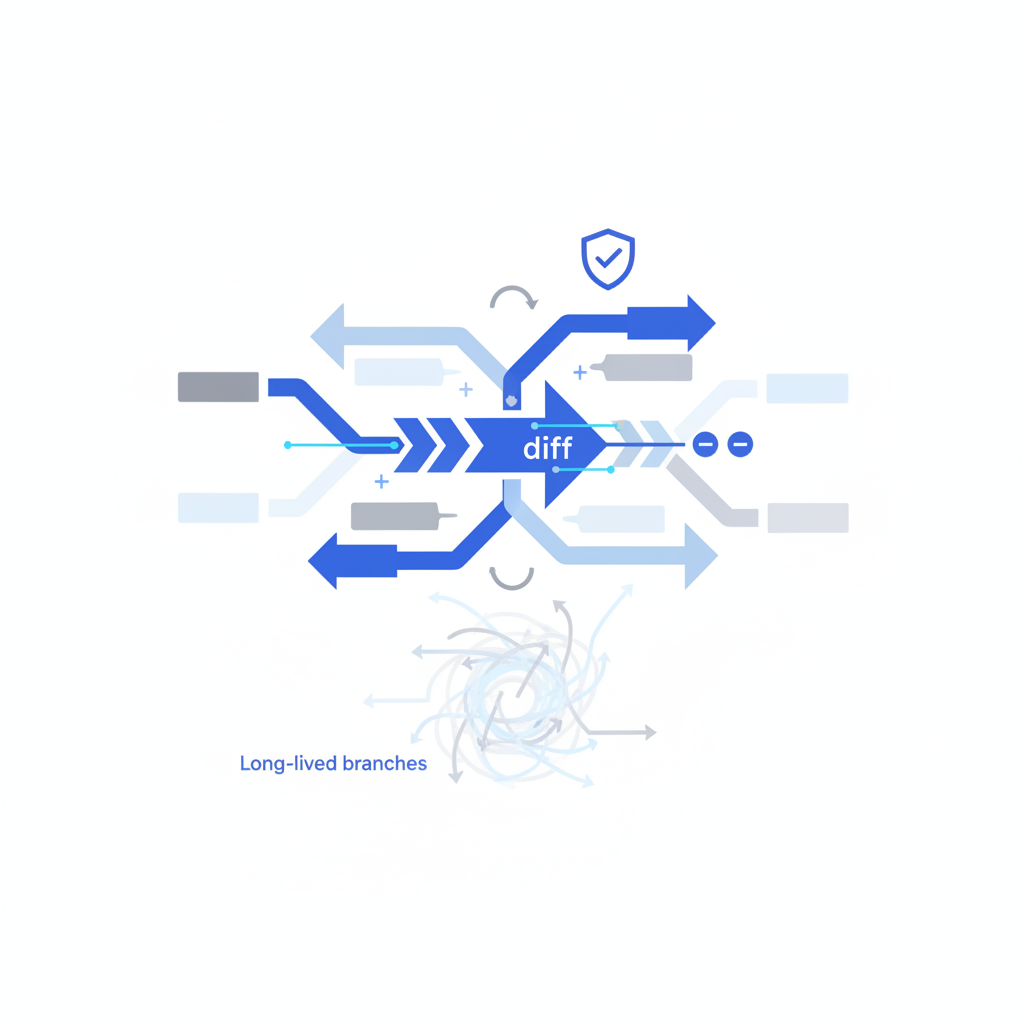
Preventing PR Description Rot in Long-Lived Branches
Long-lived branches are often seen as an anti-pattern in modern software development. The gospel of "keep branches short, merge often" is preached for good reason: it reduces merge conflicts, speeds up reviews, and keeps everyone in sync. But let's be honest, sometimes long-lived branches are unavoidable. Whether you're undertaking a massive refactor, integrating a complex third-party system, or developing a large experimental feature, a branch might live for weeks or even months.
The problem isn't just the merge conflicts; it's also the insidious "PR description rot." What starts as a clear, concise summary of your initial changes slowly decays into an irrelevant relic. As you add commits, fix bugs, refactor code, and respond to early feedback, your pull request description becomes increasingly out of sync with the actual state of the code. This rot isn't just an inconvenience; it actively hinders code review, introduces risk, and wastes valuable engineering time.
The Anatomy of PR Description Rot
Imagine you create a branch feature/new-user-onboarding for a significant overhaul of your signup flow. You write an initial PR description outlining the new steps, the API changes, and the expected user experience. It's thorough and accurate.
Over the next three weeks, you:
* Add several commits implementing the core features.
* Discover an edge case in the payment integration and add a fix.
* Refactor the frontend component structure based on team feedback.
* Merge main into your branch twice to keep up with security patches and library updates.
* Revert a short-lived experiment that didn't pan out.
* Add new tests to cover a critical path identified late in development.
By the time the branch is ready for a full review, the original PR description is a historical artifact. It doesn't mention the payment edge case fix, the frontend refactor, the reverted experiment, or the new tests. Reviewers, relying on the description for context, are left to painstakingly piece together the story from the commit log and the diff itself. This leads to:
- Reviewer Fatigue: Sifting through dozens of commits and a massive diff without a guiding narrative is exhausting.
- Missed Context: Crucial details, especially regarding why certain changes were made, are often lost.
- Increased Review Time: Reviewers take longer to understand the changes, leading to bottlenecks.
- Higher Risk: Without a clear understanding of the full scope, potential bugs or regressions are more likely to slip through.
This is PR description rot in action. The description, once a helpful guide, becomes a misleading signpost pointing to a destination that no longer exists.
Strategies to Combat Rot
Preventing description rot requires a combination of discipline, process, and tooling.
1. The "Keep Branches Short" Mantra (When Possible)
The most effective way to avoid description rot is to prevent long-lived branches in the first place. If you can break down a large feature into smaller, independent pull requests that merge frequently, you'll naturally keep your descriptions fresh. Each PR will have a focused scope, making its description easier to maintain.
Pitfall: This isn't always feasible. Some changes are inherently large and require an isolated development period. Trying to force a massive refactor into tiny PRs can sometimes create more overhead than it solves, leading to incomplete features or unstable intermediate states.
2. Manual Updates (The Painful Reality)
The most direct, albeit tedious, approach is to manually update your PR description every time you push significant changes to your branch. This means going back to GitHub, GitLab, or whatever platform you use, and editing the description to reflect new features, bug fixes, or architectural shifts.
Pitfall: This relies heavily on developer discipline, which is often the first casualty in a busy sprint. It's easy to forget, especially when you're in the flow of coding, or when a "quick fix" turns into a cascade of changes. The result is often a description that's only partially updated or still lags behind the actual code.
3. Structured Commit Messages (A Partial Solution)
Encouraging detailed, conventional commit messages can provide a richer commit history. Tools like Conventional Commits or linters like commitlint help enforce a standard. A good commit history can be a valuable resource for reviewers.
You can inspect your changes with commands like:
git log --pretty=format:"%h %s" --no-merges origin/main..HEAD
This command shows a concise list of commit hashes and their subjects, differentiating your branch from main.
Pitfall: While useful, a list of commit messages is not a PR description. A PR description needs to provide a holistic view: * Summary: What's the overall goal of this PR? * Motivation: Why are these changes being made? (Context often missing from individual commits). * Test Plan: How should a reviewer verify the changes? * Risk Assessment: What are the potential pitfalls or areas of concern? * Screenshots/Demos: Visual aids for user-facing changes.
Commit messages are granular; PR descriptions need to synthesize.
4. Automated Description Generation (The Modern Approach)
This is where automation shines. Tools designed to analyze your diff and generate or update your PR description can significantly reduce rot. Imagine a system that, every time you push new commits to your long-lived branch, re-evaluates the entire diff against the target branch and generates a fresh description.
This approach ensures that: * The summary always reflects the current state of the changes. * The test plan is updated to include new areas of code or modified functionality. * Potential risks are re-assessed based on the latest code.
Pitfall: Automation is a powerful assistant, not a replacement for human intelligence. A generated description might miss nuanced business context or specific architectural decisions that are not explicitly visible in the code changes. It still requires human review and refinement to ensure it's 100% accurate and comprehensive.
Practical Tips for Managing Long-Lived Branches
Even with the best tools, you need good practices to manage long-lived branches effectively.
Tip 1: Be Intentional About Your Branching Strategy
If you know a branch will be long-lived, acknowledge it upfront. Document its purpose, expected lifespan, and the scope it intends to cover. This sets